
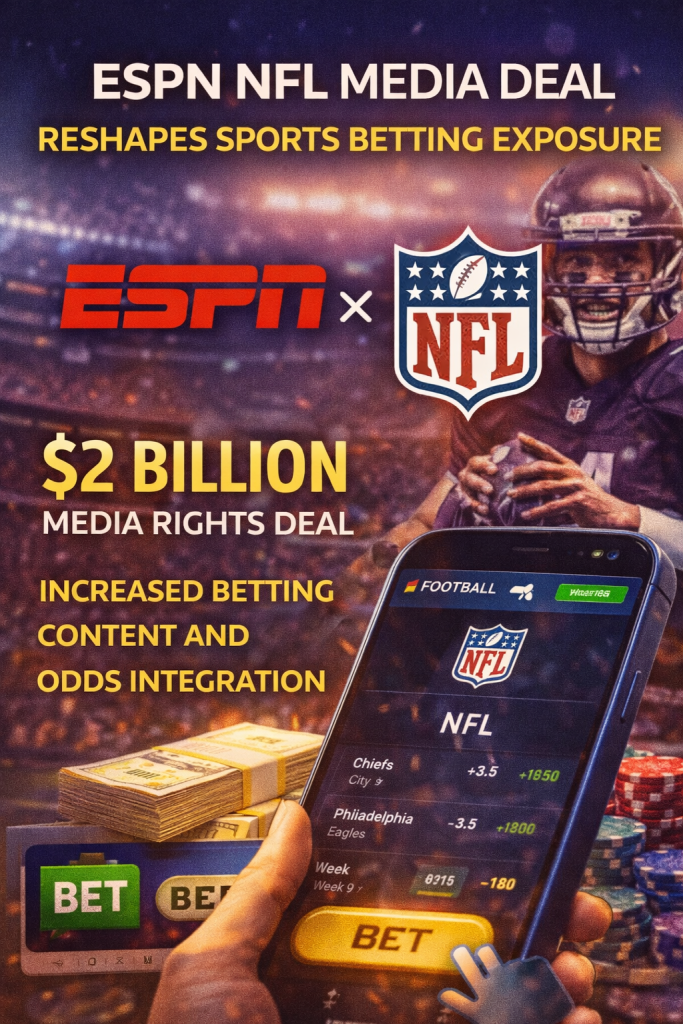
A landmark media rights agreement between ESPN and the National Football League is transforming the relationship between mainstream sports broadcasting and the sports betting industry. The multiyear deal includes expanded rights to NFL RedZone, fantasy football content, and integration of betting-related data across ESPN platforms. This development is widely seen as a strategic pivot to deepen fan engagement, accelerate audience monetization, and create new revenue streams for both broadcast partners and wagering operators.
Overview of the ESPN NFL Media Deal
In early 2026, ESPN secured regulatory approval for a comprehensive media rights agreement with the NFL valued at approximately $2 billion per year. The deal encompasses traditional broadcast rights, extended coverage of NFL RedZone,e and exclusive access to digital fantasy and analysis content. It also lays the groundwork for expanded integration of real-time statistics, betting trends, and predictive analytics within ESPN programming.
The deal’s scope reflects a broader shift in how media networks, leagues, and wagering platforms are aligning strategic priorities to capture attention in an increasingly competitive entertainment landscape.
Integration of Betting Content and Fan Engagement
One of the most significant aspects of the agreement is the deliberate integration of data and insights tailored to sports bettors. ESPN plans to embed advanced statistics, live market probabilities, and interactive features directly into digital broadcasts and mobile content. This approach is expected to enhance engagement among both casual fans and betting enthusiasts by offering real-time context that bridges entertainment and predictive analysis.
By incorporating betting-related content into widely consumed NFL coverage, ESPN is reducing the distance between traditional sports audiences and wagering native experiences. This trend represents a natural evolution of digital sports media as fans seek richer, contextually relevant insights.
Impact on Sports Betting Exposure
The media deal is poised to broaden exposure for licensed sportsbooks in several ways. First, expanded coverage of NFL RedZone – a highly popular continuous-scoring format – naturally increases viewing time and opens advertising slots tied to betting data and partner promotions. Second, ESPN’s mobile and online platforms can deliver personalized betting-related experiences such as odds tracking, market movement alerts, and widget integration during live games.
This expanded visibility is expected to drive higher conversion rates for sportsbooks licensed in regulated markets. In turn, operators may increase promotional budgets, deepen partnerships with media networks, and innovate product offerings that resonate with a broader audience segment.
Regulatory Considerations and Responsible Gaming
The integration of betting information in mainstream broadcast content also raises regulatory considerations. Media companies and leagues must navigate evolving frameworks around responsible gaming, advertising disclosures, and consumer protection standards. States with stringent marketing regulations may require clear separation between editorial content and wagering promotions.
ESPN has indicated that responsible gaming tools will be embedded in digital experiences, including opt-outs, session time tracking, and educational resources. These measures are expected to complement industry-wide efforts to create safer wagering environments as exposure increases.
Economic Implications for the Betting Ecosystem
The alignment between ESPN and the NFL signals the maturation of the sports betting ecosystem, in which media rights are no longer siloed from wagering-related value. Analysts project that this integration will accelerate investments in analytics technology, real-time odds distribution, and predictive modeling – capabilities that enhance both fan experience and competitive differentiation within the sportsbook market.
Increased exposure through mainstream sports media has downstream effects on advertising revenue, sponsorship agreements, and cross-platform monetization. Betting operators that successfully leverage this exposure can tap into larger addressable audiences, moving beyond peak-event wagering to sustained engagement throughout the NFL season.
Technological Advancements Supporting Integration
Emerging technologies such as augmented reality (AR) overlays, data visualizations, and interactive streaming formats are expected to play a key role in how betting content is delivered to audiences. These innovations can transform traditional broadcasts into dynamic experiences where users contextualize odds, player metrics, and trend shifts without diverting attention from live action.
Adoption of app-based platforms that sync with live television broadcasts further enhances accessibility, allowing sports bettors to interact with markets seamlessly – a shift that stands to benefit both established operators and newer entrants with competitive digital offerings.
Conclusion
The ESPN NFL media deal marks a foundational shift in how sports broadcasting and the betting industry intersect. By embedding betting-related content across high-visibility platforms, the agreement not only augments fan engagement but also expands the addressable market for licensed sportsbooks. As technology and regulation evolve, this integration is likely to shape the future of sports media and wagering partnerships, driving innovation, monetization, and deeper audience involvement.