
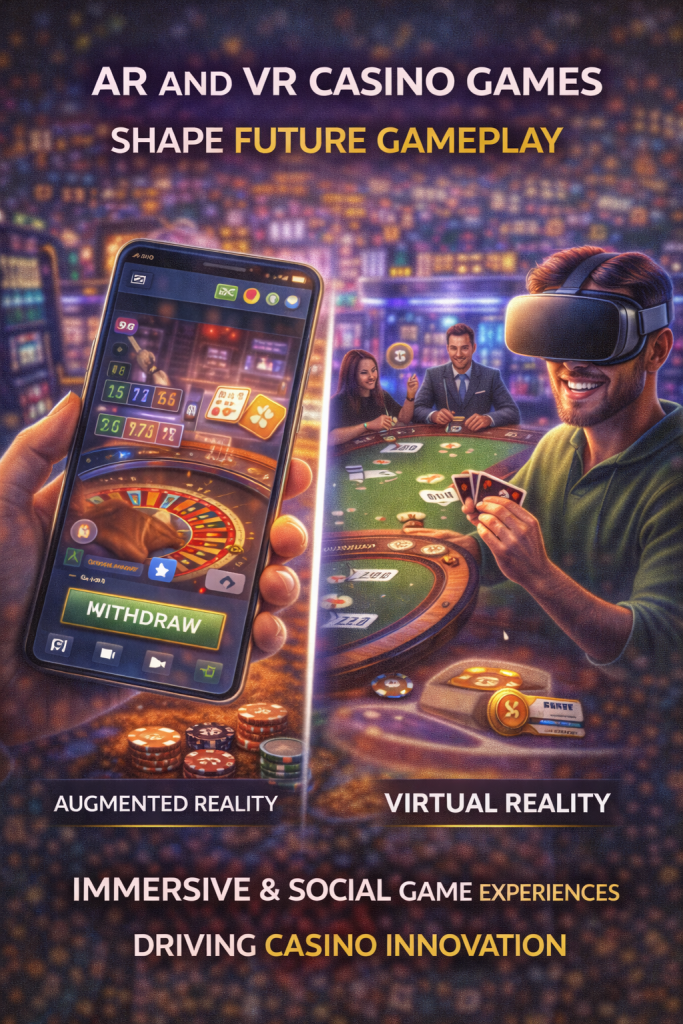
Augmented reality and virtual reality technologies are redefining how players experience online casinos. In 2026, AR and VR casino games are moving beyond experimental features into fully developed products that blend immersive environments, interactive gameplay, and social engagement. This evolution represents a major shift from traditional screen-based gaming toward experience-driven digital entertainment.
Understanding AR and VR in Casino Gaming
Augmented reality enhances the real world by overlaying digital elements onto physical surroundings, while virtual reality places players inside fully simulated environments. In casino gaming, AR is commonly used to enrich interfaces, add visual layers, and provide contextual information. VR, on the other hand, creates complete casino spaces where players can walk, interact, and play games as if they were inside a physical venue.
These technologies allow casinos to deliver experiences that go beyond spinning reels or clicking buttons, focusing on presence, immersion, and realism.
How VR Casinos Are Changing Gameplay
VR casinos replicate the atmosphere of land-based casinos through detailed environments, spatial audio, and real-time interaction. Players can move between tables, observe other participants, communicate through voice and gestures, and engage with live dealers in virtual studios.
This level of immersion increases session depth and emotional engagement. Games such as blackjack, roulette, and poker benefit most as social interaction and table presence play a central role in the experience.
The Role of AR in Enhancing Online Casinos
AR applications focus on improving usability and engagement without requiring full immersion. Players can view live statistics, animated overlays, and interactive elements layered onto standard gameplay. AR can also be used in mobile environments where physical surroundings become part of the gaming interface.
For casinos, AR offers a way to enhance gameplay while remaining accessible to a wider audience that may not own VR headsets.
Social Interaction and Multiplayer Experiences
One of the strongest advantages of AR and VR casino games is social connectivity. Players can interact with others in real time, creating shared experiences that mimic physical casinos. Avatars voice chat and interactive gestures add a human dimension that is often missing in traditional online gaming.
These features increase retention by transforming casino play into a social activity rather than a solitary one.
Technology and Hardware Adoption
The growth of AR and VR casino gaming is closely tied to hardware accessibility. Headsets are becoming more affordable, lighter, and more powerful, which lowers barriers to entry. Improvements in motion tracking, graphics rendering, and network latency further enhance the realism of virtual casino environments.
As adoption increases, casinos are investing in optimized platforms that support multiple devices, ensuring compatibility across different hardware ecosystems.
Impact on Player Behavior and Engagement
Immersive gameplay influences how players interact with casino content. VR environments encourage longer sessions, deeper focus, and stronger emotional connection to gameplay. This shift requires casinos to adapt responsible gaming tools to immersive contexts, ensuring players remain aware of time spent and spending limits.
AR and VR platforms are increasingly integrating visual reminders, session tracking, and customizable alerts to support responsible play.
Challenges and Regulatory Considerations
Despite rapid innovation AR and VR casino games face challenges related to regulation accessibility and standardization. Regulators are assessing how immersive environments affect player behavior and what safeguards are necessary. Technical requirements and hardware costs may also limit immediate mass adoption.
However, as frameworks evolve and technology matures, these challenges are expected to be addressed through industry standards and regulatory guidance.
Future Outlook
AR and VR casino games are expected to become a core component of next-generation online casinos rather than niche offerings. Future developments may include cross-platform experiences, integration with live events, personalized virtual environments, and deeper use of artificial intelligence within immersive spaces.
Casinos that invest early in AR and VR capabilities are likely to gain a competitive advantage as player expectations shift toward richer, more engaging experiences.
Conclusion
AR and VR technologies are shaping the future of casino gameplay by introducing immersive, interactive, and socially connected experiences. As adoption grows and technology advances, these platforms will redefine how players engage with online casinos. The transition toward experience-driven gaming marks a new chapter in the evolution of digital gambling, where immersion and interaction become as important as the games themselves.