
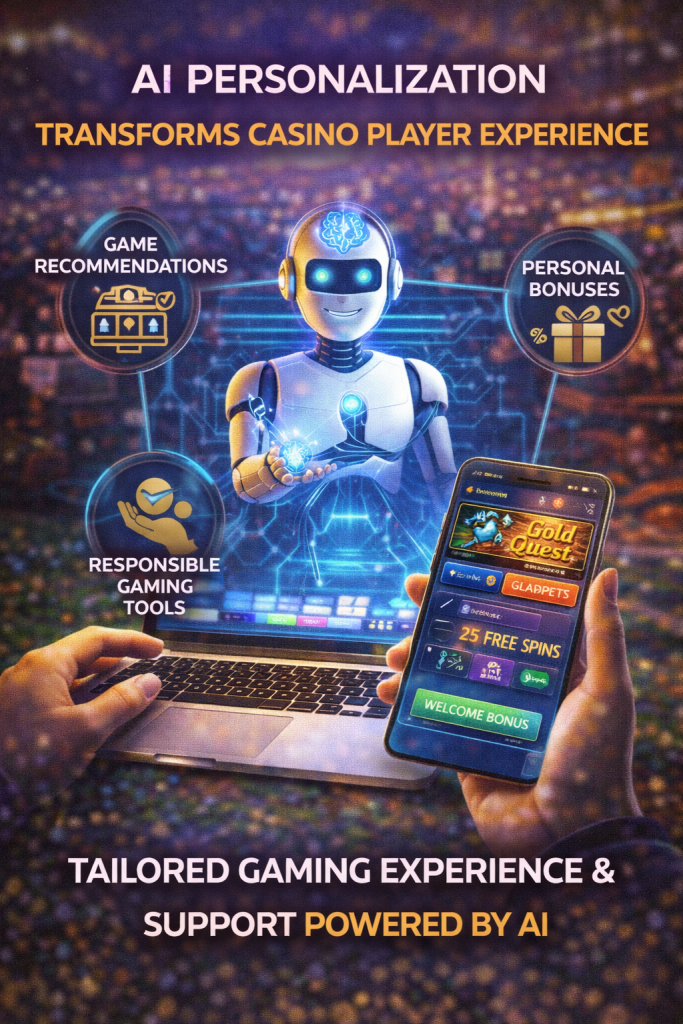
Artificial intelligence is rapidly reshaping how online casinos interact with players by delivering highly personalized gaming experiences. In 2026, AI-driven systems are becoming a central component of casino platforms, influencing everything from game recommendations and bonus structures to responsible gaming tools and customer support. This transformation reflects a broader shift toward data-driven engagement models aimed at improving player satisfaction, retention, and long-term value.
How AI Personalization Works in Casinos
AI personalization relies on machine learning algorithms that analyze large volumes of player data in real time. These systems evaluate gameplay behavior, session duration, betting patterns, game preferences, and interaction history to generate individualized experiences for each user.
Rather than offering uniform content, casinos can now tailor lobby layouts, recommend specific games, adjust promotional offers, and optimize user interfaces based on player behavior. This level of customization allows platforms to respond dynamically as preferences evolve.
Game Recommendations and Content Discovery
One of the most visible applications of AI personalization is intelligent game recommendation. AI models identify patterns across similar player profiles and surface games that align with individual interests. This reduces friction in content discovery and increases engagement by guiding players toward experiences they are more likely to enjoy.
For players, this means less time searching and more time playing relevant content. For casinos, it leads to higher session frequency and improved conversion across game categories.
Dynamic Bonuses and Promotions
AI systems enable casinos to move beyond generic bonus campaigns toward targeted incentives. Promotions can now be personalized based on play style, risk tolerance, and historical response to offers. High-frequency players may receive loyalty-focused rewards, while casual users are offered lower-commitment incentives to encourage repeat visits.
This precision reduces promotional waste and supports more sustainable bonus strategies while maintaining compliance with responsible gaming guidelines.
Personalized Responsible Gaming Tools
AI personalization also plays a critical role in responsible gaming. Advanced models monitor behavioral signals that may indicate elevated risk, such as increased session length, chasing losses, or abrupt changes in wagering behavior. When thresholds are detected, platforms can intervene with tailored messaging, cooldown suggestions, or spending limit prompts.
These tools allow casinos to proactively support player well-being while aligning with regulatory expectations for player protection.
Customer Support and AI Assistants
Customer support experiences are also being transformed through AI-powered chat systems. These assistants provide personalized responses based on account history, transaction activity, and previous interactions. This reduces response times and improves resolution accuracy while freeing human agents to handle more complex issues.
In some platforms, AI assistants also guide players through onboarding payment setup and game rules, creating a more intuitive user journey.
Impact on Player Retention and Loyalty
Personalization directly influences retention by making players feel understood and valued. Customized experiences foster stronger emotional connections to platforms and reduce the likelihood of churn. Loyalty programs enhanced by AI can adapt reward structures dynamically, ensuring that incentives remain relevant over time.
This shift from static loyalty models to adaptive engagement strategies represents a major competitive advantage in crowded online casino markets.
Data Ethics and Privacy Considerations
As AI personalization expands, casinos face greater responsibility regarding data use and transparency. Players are becoming more aware of how their data is collected and applied. Leading platforms are responding by improving consent mechanisms, data security standards, and communication around AI-driven features.
Balancing personalization with privacy protection is essential for maintaining trust and long-term platform credibility.
Future Outlook for AI in Casinos
AI personalization is expected to deepen as predictive analytics and real-time adaptation capabilities improve. Future systems may adjust game difficulty interfaces and engagement pacing dynamically based on player mood and context. Integration with biometric inputs and cross-platform data may further enhance customization.
Regulators and operators alike will continue to define boundaries, ensuring that personalization enhances entertainment without encouraging harmful behavior.
Conclusion
AI personalization is transforming the casino player experience by delivering tailored content, targeted promotions, proactive responsible gaming tools, and more efficient support. In 2026, this technology will no longer a differentiator but a foundational element of competitive casino platforms. As AI capabilities mature, personalization will play an increasingly central role in shaping how players engage with online casinos and how operators build sustainable, long-term relationships.