
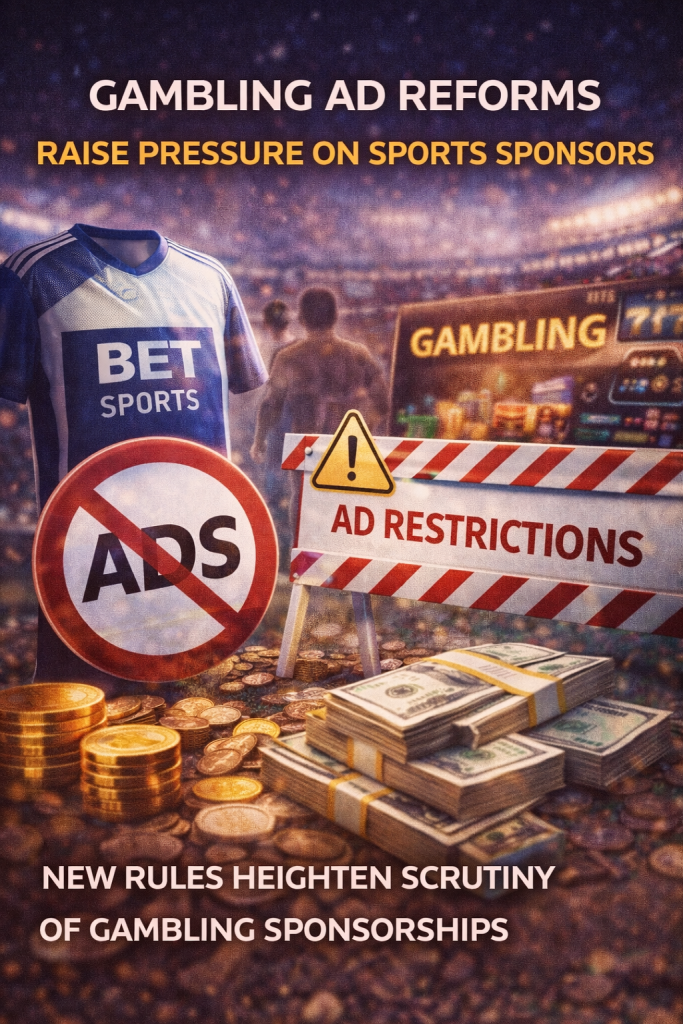
Proposed and enacted gambling advertising reforms across multiple jurisdictions are increasing pressure on sports sponsors, leagues, and broadcasters to rethink commercial partnerships. As regulators respond to concerns around consumer protection and advertising exposure, the relationship between gambling brands and professional sports is entering a period of structural change with long-term implications for sponsorship models and revenue streams.
Overview of Gambling Advertising Reforms
Governments in several major markets have accelerated efforts to tighten gambling advertising rules, particularly around live sports broadcasts, digital platforms, and youth exposure. These reforms include restrictions on ad placement, limits on broadcast timing, bans on certain promotional language, and stricter requirements for responsible gambling messaging.
While the scope of reforms varies by jurisdiction, the direction is consistent. Regulators aim to reduce the saturation of gambling messaging in sports environments while maintaining legal betting frameworks.
Impact on Sports Sponsorship Deals
Sports sponsorships have long been a primary marketing channel for gambling operators, providing brand visibility through shirt sponsorships, stadium signage, broadcast integrations, and digital content. Advertising reforms directly pressure these arrangements by limiting where and how gambling brands can appear.
Leagues and clubs are now required to reassess sponsor categories, ensure compliance with evolving regulations, and in some cases, phase out existing agreements. This creates uncertainty for teams that rely heavily on gambling sponsorship revenue, particularly in football and other high-exposure sports.
Response from Gambling Operators
Gambling companies are adapting by shifting their focus from mass-exposure sponsorships to more targeted, compliant engagement strategies. These include content-based partnerships, data-driven digital marketing, affiliate channels, and platform-owned media ecosystems.
Operators are also investing more heavily in responsible gambling, prioritizing brand education and long-term customer value over short-term acquisition driven by high-visibility sponsorships.
Broadcaster and Media Considerations
Broadcast partners face increased compliance responsibilities as advertising reforms affect live sports coverage. This includes managing ad inventory, timing content approval, and geographic targeting. Broadcasters are balancing regulatory obligations with commercial demand as gambling advertising remains a high-value category.
Some media companies are responding by diversifying their advertiser portfolios and placing greater emphasis on non-gambling sponsors to reduce dependence on restricted categories.
Economic Implications for Sports Organizations
Reduced access to gambling sponsorship inventory could impact club finances, particularly in leagues where betting brands account for a significant share of commercial income. Smaller clubs and lower-tier competitions may face greater challenges in replacing lost sponsorship value than global brands with diversified revenue sources.
This environment is accelerating innovation in sponsorship structures, including shorter-term deals, performance-based agreements, and partnerships centered on technology, data, or fan engagement, rather than logo placement alone.
Regulatory Outlook
Regulators continue to emphasize that reforms are designed to balance market sustainability with consumer protection. As frameworks mature, clearer guidelines are expected, which may provide greater certainty for sports organizations and sponsors alike.
However, ongoing public scrutiny suggests that gambling advertising will remain a focal point of regulatory debate, requiring ongoing adaptation from all stakeholders.
Conclusion
Gambling advertising reforms are reshaping the commercial relationship between sports and betting sponsors. As regulatory pressure increases, sports organizations, operators, and broadcasters must adapt sponsorship strategies to remain compliant while preserving economic stability. The shift signals a broader evolution in how gambling brands engage with sports audiences, moving toward more controlled, targeted, and responsibility-focused partnerships in the years ahead.